Destinations

China, Entered Through Its Most Revealing Cities

Each city opens a different China: history, food, design, landscape, business, ritual, or local rhythm.

A More Considered Map

What kind of China should the route reveal first?

01 / Imperial Scale, Private Culture, Political Memory

Beijing is where China's past still sets the frame.

Beijing rewards guests who want context: imperial architecture, contemporary art, private dining, old neighborhoods, museums, gardens, and the quiet authority of a city shaped by power, ritual, and memory.

Best for

first-time visitors, cultural depth, imperial history, contemporary art

HistoryCultureFoodArchitectureHeritageFirst-time Visits
Forbidden City context

Beijing can be shaped through this angle when it adds real context to the journey.

Private hutong perspectives

Beijing can be shaped through this angle when it adds real context to the journey.

Contemporary art districts

Beijing can be shaped through this angle when it adds real context to the journey.

Imperial gardens

Beijing can be shaped through this angle when it adds real context to the journey.

02 / Contemporary China, Design, Dining, Urban Confidence

Shanghai reveals China in motion.

Shanghai is international, layered, and sharply contemporary: architecture, design, private tables, galleries, retail culture, business energy, and quiet historic texture.

Best for

contemporary culture, design and architecture, gastronomy, business visits

TechnologyArchitectureFoodNightlifeDesignFirst-time Visits
Architecture and urban design

Shanghai can be shaped through this angle when it adds real context to the journey.

Creative districts

Shanghai can be shaped through this angle when it adds real context to the journey.

Private dining rooms

Shanghai can be shaped through this angle when it adds real context to the journey.

Design-led retail

Shanghai can be shaped through this angle when it adds real context to the journey.

03 / Classical Gardens, Literati Refinement, Poetic Stillness

Jiangnan is China at its most edited and quietly refined.

Suzhou and Jiangnan are not best understood through a checklist. They reward slowness: garden geometry, water, stone, calligraphy, private dining, silk, tea, and the way cultural refinement can feel almost invisible until it is explained.

Best for

classical gardens, poetic atmosphere, slow travel, tea, craft and literati culture

ArchitectureHeritageCultureSlow DaysScenery
Humble Administrator's Garden in context

Suzhou / Jiangnan can be shaped through this angle when it adds real context to the journey.

Private garden perspectives

Suzhou / Jiangnan can be shaped through this angle when it adds real context to the journey.

Water town rhythm without crowds

Suzhou / Jiangnan can be shaped through this angle when it adds real context to the journey.

Tea and craft introductions

Suzhou / Jiangnan can be shaped through this angle when it adds real context to the journey.

04 / Ancient Capitals, Silk Road Memory, Civilizational Depth

Xi'an carries the weight of origin.

Xi'an is one of China's great historical thresholds: ancient capitals, city walls, Buddhist traces, Muslim Quarter food culture, Silk Road memory, and deep civilizational continuity.

Best for

ancient history, families, cultural travelers, Silk Road extensions

HistoryHeritageFoodCultureFirst-time Visits
Terracotta Warriors context

Xi'an can be shaped through this angle when it adds real context to the journey.

Ancient city wall perspectives

Xi'an can be shaped through this angle when it adds real context to the journey.

Muslim Quarter food culture

Xi'an can be shaped through this angle when it adds real context to the journey.

Buddhist and imperial heritage

Xi'an can be shaped through this angle when it adds real context to the journey.

05 / Sichuan Culture, Gastronomy, Tea, Ease, and Regional Character

Chengdu moves at a different rhythm.

Chengdu offers a softer, more sensorial entry into China: teahouses, Sichuan cuisine, neighborhood life, temples, gardens, markets, and access to western landscapes.

Best for

gastronomy, tea culture, regional China, families, slower pacing

FoodSlow DaysCultureFamilyWellness
Sichuan private dining

Chengdu can be shaped through this angle when it adds real context to the journey.

Tea houses and local rhythm

Chengdu can be shaped through this angle when it adds real context to the journey.

Market and culinary context

Chengdu can be shaped through this angle when it adds real context to the journey.

Temples and gardens

Chengdu can be shaped through this angle when it adds real context to the journey.

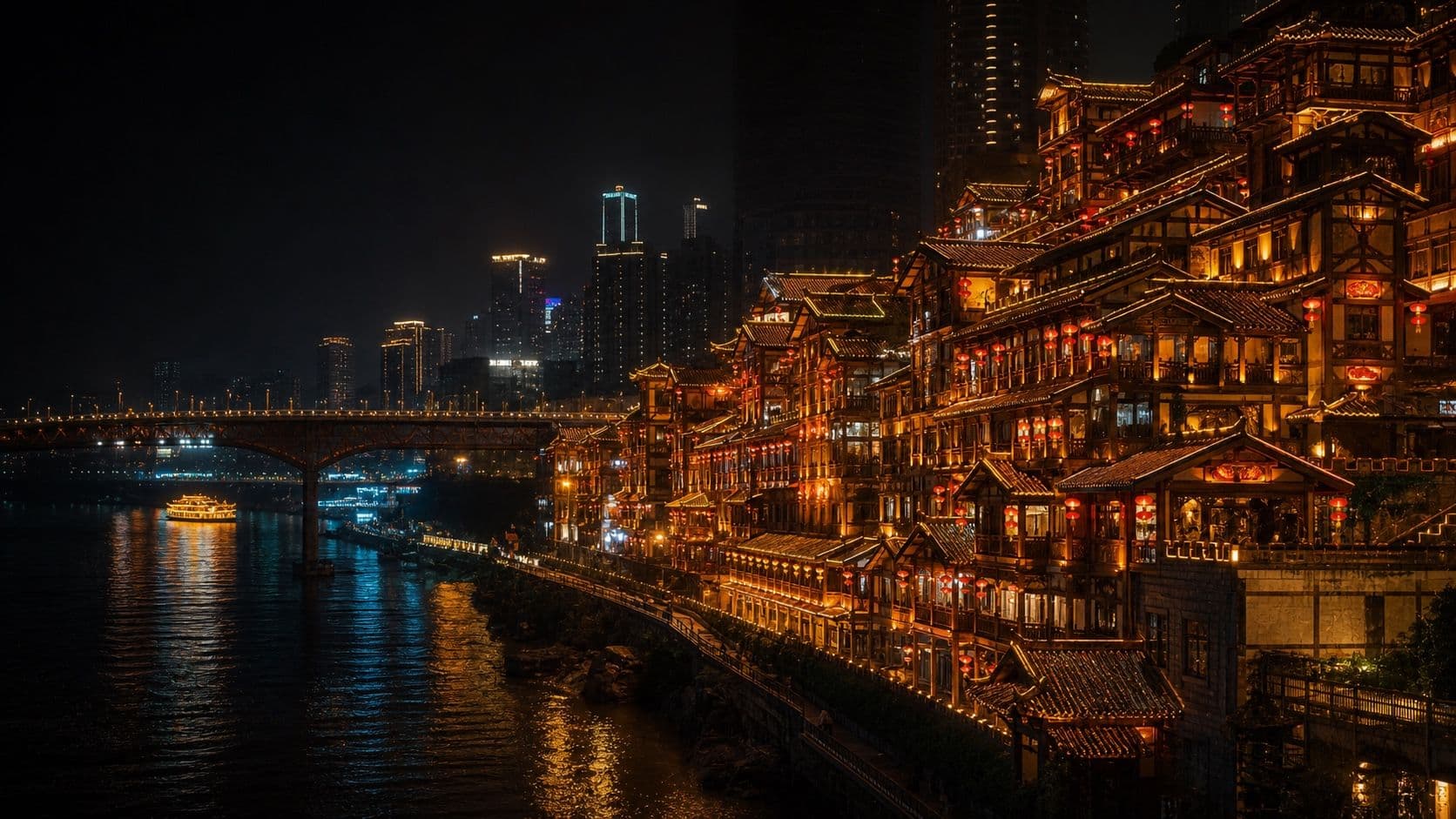
06 / Mountain City, River Nightscape, Hotpot, Vertical Urban Drama

Chongqing turns geography into atmosphere.

Chongqing is not a city to flatten into a checklist. It is best experienced through elevation, river light, late-night tables, layered streets, and the feeling of a city built into terrain.

Best for

nightlife, food culture, urban photography, regional contrast, return visitors

FoodNightlifeArchitectureScenery
River and bridge nightscape

Chongqing can be shaped through this angle when it adds real context to the journey.

Mountain-city neighborhoods

Chongqing can be shaped through this angle when it adds real context to the journey.

Hotpot and late-night dining

Chongqing can be shaped through this angle when it adds real context to the journey.

Old streets and contemporary towers

Chongqing can be shaped through this angle when it adds real context to the journey.

07 / Xiang River Energy, Hunan Cuisine, Youth Culture, Southern Tempo

Changsha is direct, lively, and confidently local.

Changsha brings a different kind of urban energy: vivid food culture, riverfront evenings, Hunan history, contemporary youth culture, and a directness that feels distinct from China's coastal polish.

Best for

food-focused travelers, repeat China visitors, southern city culture, younger travelers

FoodNightlifeCultureConversation
Hunan dining and late-night food rhythm

Changsha can be shaped through this angle when it adds real context to the journey.

Xiang River evening route

Changsha can be shaped through this angle when it adds real context to the journey.

Museums and regional history

Changsha can be shaped through this angle when it adds real context to the journey.

Yuelu Mountain and academy context

Changsha can be shaped through this angle when it adds real context to the journey.

08 / Cantonese Tables, Pearl River Commerce, Lingnan Culture

Guangzhou is China's southern fluency.

Guangzhou is a sophisticated southern gateway: Cantonese food culture, commercial history, Pearl River light, Lingnan architecture, and access to the Greater Bay Area.

Best for

Cantonese gastronomy, business visits, Greater Bay Area, design and commerce

FoodBusinessArchitectureCulture
Cantonese private dining

Guangzhou can be shaped through this angle when it adds real context to the journey.

Pearl River evening views

Guangzhou can be shaped through this angle when it adds real context to the journey.

Lingnan architecture and gardens

Guangzhou can be shaped through this angle when it adds real context to the journey.

Trade and business context

Guangzhou can be shaped through this angle when it adds real context to the journey.

09 / Karst Landscapes, River Stillness, Southern Light

Guilin turns landscape into silence.

Guilin and the Li River offer a softer landscape chapter: limestone peaks, water, mist, rural texture, and an older visual language of southern China.

Best for

landscape, families, slow travel, photography, southern extensions

LandscapesScenerySlow DaysFamily
Li River private pacing

Guilin can be shaped through this angle when it adds real context to the journey.

Karst landscapes

Guilin can be shaped through this angle when it adds real context to the journey.

Village and market context

Guilin can be shaped through this angle when it adds real context to the journey.

Tea and rural texture

Guilin can be shaped through this angle when it adds real context to the journey.

10 / Sandstone Pillars, Forest Mist, Vertical Landscape

Zhangjiajie is landscape at full height.

Zhangjiajie is most compelling when treated as a landscape study rather than a photo stop: vertical stone, mist, forest, pacing, and routes that avoid the most obvious congestion.

Best for

landscape, active travelers, families, photography, Hunan extensions

LandscapesSceneryOutdoor Activity
Sandstone pillar landscapes

Zhangjiajie can be shaped through this angle when it adds real context to the journey.

Forest walking routes

Zhangjiajie can be shaped through this angle when it adds real context to the journey.

Mist and early light timing

Zhangjiajie can be shaped through this angle when it adds real context to the journey.

Private pacing and crowd avoidance

Zhangjiajie can be shaped through this angle when it adds real context to the journey.

11 / Silk Road Memory, Old City Texture, Far-Western China

Kashgar changes the scale of China.

Kashgar gives a far-western reading of China: earth-toned streets, craft, markets, desert routes, mountain approaches, and the feeling of standing at a historical edge.

Best for

Silk Road, adventure, photography, cultural contrast, return visitors

CultureHeritageFoodArchitecture
Old city texture

Kashgar can be shaped through this angle when it adds real context to the journey.

Markets and craft

Kashgar can be shaped through this angle when it adds real context to the journey.

Silk Road context

Kashgar can be shaped through this angle when it adds real context to the journey.

Desert and mountain routing

Kashgar can be shaped through this angle when it adds real context to the journey.

12 / Plateau Light, Tibetan Culture, Spiritual Geography

Lhasa requires altitude, patience, and respect.

Lhasa is not a casual add-on. It requires altitude planning, respectful pacing, permit awareness, and careful cultural interpretation so the city is approached with seriousness rather than spectacle.

Best for

spiritual geography, plateau landscapes, return visitors, slow travel, cultural depth

CultureHeritageLandscapesWellness
Potala and old city context

Lhasa can be shaped through this angle when it adds real context to the journey.

Altitude-aware pacing

Lhasa can be shaped through this angle when it adds real context to the journey.

Monastery and pilgrimage rhythm

Lhasa can be shaped through this angle when it adds real context to the journey.

Plateau landscape extensions

Lhasa can be shaped through this angle when it adds real context to the journey.

13 / Highland Light, Garden Rhythm, Yunnan Gateway

Kunming gives Yunnan its first gentle breath.

Kunming sets a gentle Yunnan pace: lake walks, flower markets, regional food, highland light, and onward access to Dali, Lijiang, Shangri-La, or deeper minority culture routes.

Best for

Yunnan arrivals, soft pacing, gardens, regional food, highland climate

Slow DaysFoodSceneryWellness
Green Lake and garden rhythm

Kunming can be shaped through this angle when it adds real context to the journey.

Yunnan market and food context

Kunming can be shaped through this angle when it adds real context to the journey.

Flower culture and highland light

Kunming can be shaped through this angle when it adds real context to the journey.

Gateway routing into western Yunnan

Kunming can be shaped through this angle when it adds real context to the journey.

14 / Erhai Water, Cangshan Mountains, Bai Culture

Dali is where Yunnan slows into water and mountain.

Dali is a spacious chapter between city and mountain: Erhai light, Cangshan weather, Bai architecture, craft villages, tea, markets, and an unforced rhythm.

Best for

slow travel, families, craft and village culture, lake landscapes, Yunnan extensions

Slow DaysSceneryCultureWellness
Erhai lake rhythm

Dali can be shaped through this angle when it adds real context to the journey.

Cangshan mountain weather

Dali can be shaped through this angle when it adds real context to the journey.

Bai architecture and village texture

Dali can be shaped through this angle when it adds real context to the journey.

Tea, markets, and regional tables

Dali can be shaped through this angle when it adds real context to the journey.

15 / Naxi Heritage, Water Lanes, Mountain Proximity

Lijiang is strongest when it is read quietly.

Lijiang is best approached through early light, water lanes, Naxi context, quieter courtyards, mountain air, and selective extensions beyond the old-town surface.

Best for

heritage, mountain access, photography, families, Yunnan culture

HeritageScenerySlow DaysCulture
Naxi architecture and water systems

Lijiang can be shaped through this angle when it adds real context to the journey.

Early morning old-town pacing

Lijiang can be shaped through this angle when it adds real context to the journey.

Jade Dragon Snow Mountain context

Lijiang can be shaped through this angle when it adds real context to the journey.

Music, craft, and local hosts

Lijiang can be shaped through this angle when it adds real context to the journey.

Route Design

Cities are selected for rhythm, not coverage.

We select places because they clarify the journey, not because they fill a checklist.

Purpose

Why the guest is traveling.

Pace

How quickly the journey should move.

Access

What should be arranged privately.

Context

How each city contributes to the whole route.

The destination is only the beginning.

Share the cities or the kind of China you want to understand. We will shape the route around your purpose.

Begin a Private Consultation